
Walk Through the Home as If You Already Lived There
Rather than moving through the home as you would a showroom, walk it the way you would live in it. Start at the garage or front door with your hands full, as if arriving home with shopping or school bags, and notice how far you carry everything to the kitchen.
Then play out an ordinary day. Where would breakfast happen on a rushed morning, and can two people get ready for work without crossing paths. Follow the laundry route from the bedrooms to the machine and back, and picture where wet washing would hang on a Melbourne winter day.
Do the same for your weekends. If you entertain, trace how guests would move between the kitchen, dining area and alfresco. If you have children, check whether the main living area gives you a clear line of sight to where they would play. The home designs that suit you best are the ones that make these routines feel effortless, not just the ones that photograph well.
Pay Attention to the Actual Size of Each Room
Display homes are often furnished by professional stylists, and clever styling can make a compact room feel more generous than it is. Custom furniture may be slightly smaller than standard pieces, so measure against your own reality rather than the staging.
In the bedrooms, picture your actual bed. Stand where a queen or king bed would sit and check the walking space left on each side, plus room for bedside tables and a chest of drawers. In secondary bedrooms, consider whether a desk would fit alongside the bed as children grow.
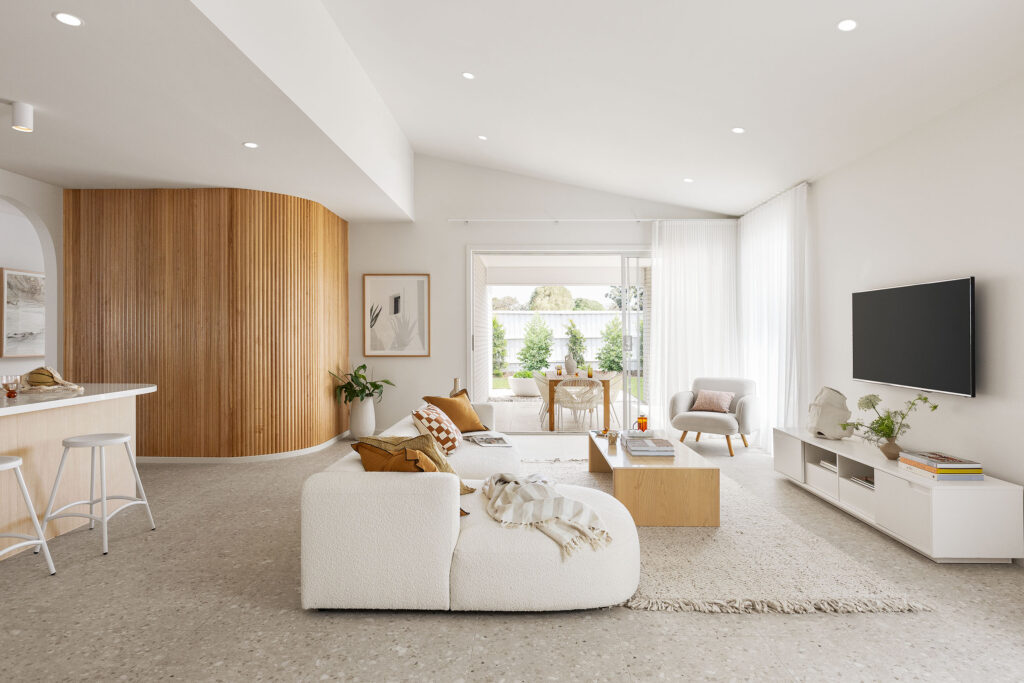
In the living and dining areas, think about your own furniture. Would your sofa fit while leaving a comfortable route to the alfresco doors, and would a table that seats your extended family still allow chairs to slide out freely. Note the room dimensions on the plan while you are standing in the space, so the numbers mean something later.
Test the Kitchen From an Everyday Use Perspective
Kitchens tend to draw the most attention in a display home, but look past the stone benchtops and pendant lights to how the space would actually work. Check the clear bench space either side of the cooktop and sink, because that is where meal preparation genuinely happens.
Open the pantry and cabinetry. Is the pantry deep enough for your weekly shop, and can you reach it easily from the fridge and benches. Look at where the dishwasher, oven and fridge cavity sit in relation to one another, and whether two people could cook and unpack the dishwasher at the same time without colliding.
Finally, test the movement between the kitchen and dining space with plates in mind. A kitchen that connects cleanly to the meals area, with a clear serving path, will serve you better than one that simply looks striking on the day.
Look Closely at Storage Throughout the Home
Storage is one of the easiest things to overlook in display homes in Melbourne because styled homes carry almost no clutter. Open every wardrobe, cupboard and drawer you are permitted to, and judge the storage against a real household rather than a staged one.
In the bedrooms, check the wardrobe depth, hanging space and shelving, and whether the main suite offers enough room for two people’s clothing. Look for a linen cupboard near the bathrooms and bedrooms, and note its size honestly against towels, sheets and spare bedding.
Then consider the everyday items that need a home: vacuum cleaners, brooms, school bags, sporting gear, suitcases and the overflow from the kitchen. Garage storage, hallway cupboards and butler’s pantries all help. If a design feels short on storage while completely empty, it will feel far tighter once you move in.
Notice Where Natural Light Enters the Home
As you walk through, pay attention to where the light is coming from. Note which rooms feel bright and welcoming, where the larger windows sit and how the living areas connect to daylight. North-facing living zones tend to feel warmer and brighter across the year.
Remember, though, that the display home’s orientation is fixed to its own block, and your block may face a different direction entirely. A living room that glows in the display village could feel quite different on your land. Ask how the design responds to other orientations, and whether window positions can be adjusted to suit your site. If you are still choosing land, exploring house and land packages can help you match a design to a block where the orientation already works in your favour.
Separate Display Upgrades From Standard Inclusions
This is one of the most important checks you can make. Display homes often showcase optional upgrades, from premium façades and higher ceilings to upgraded appliances and extended alfresco areas. None of this is a problem, provided you know which features are standard and which are additions.
Ask directly: is this part of the standard inclusions for this design, or an upgrade, and roughly what does the upgrade add to the price. Reputable home builders in Melbourne will answer plainly, and Nostra prices upfront so you can compare designs on a like-for-like basis.
For a deeper explanation of how to tell the two apart, read Nostra’s guide to essential inclusions versus upgrades before you visit. Walking in with that knowledge turns the display home from a wish list into a realistic preview of what your budget delivers.
Take Notes Before You Visit the Next Display Home
After three or four visits, display homes blur together quickly. Before you leave each one, take a few minutes to record what you saw while it is still fresh.
Photograph the areas you are permitted to, especially kitchens, storage and any details you want to compare later. Keep a simple note for each design covering what you liked, what you would change and any measurements that mattered.
It also helps to keep a running list of questions to ask at a display home: standard inclusions, site costs, timeframes and how the design could adapt to your block. Reviewing your notes between visits makes the differences between new home designs clear, and your shortlist almost builds itself.
Speak to the Nostra Team While You’re There
The consultants at each display home are one of the most useful resources in the village, so use your visit to have a real conversation. Ask which Nostra home designs suit your budget and block, and whether the layout you are standing in comes in other sizes or configurations.
If you have already purchased land in areas such as Clyde North, Tarneit, Kalkallo or Officer, ask how the design would sit on your block and what the estate guidelines might mean for the façade. If you have not, the team can talk you through current house and land options in Melbourne’s growth corridors.
Nostra Homes has been building in Victoria since 2006, with more than 3,500 homes completed and a 25 Year Structural Guarantee behind every build. Visiting display homes in Melbourne with a clear checklist, and the right questions, is how that experience starts working for you before a single contract is signed.
Ready to take the next step?
The best way to test everything in this guide is in person. Visit a Nostra display home to walk through our designs with your own checklist in hand, or speak with our team about home designs, blocks and inclusions before you build.
 Nostra Homes